The Riven Journal
Field notes on training to true failure.
Quiet, evidence-led writing on muscle failure, velocity-based training, and recovery — from the team building the failure score for your wrist.
The science
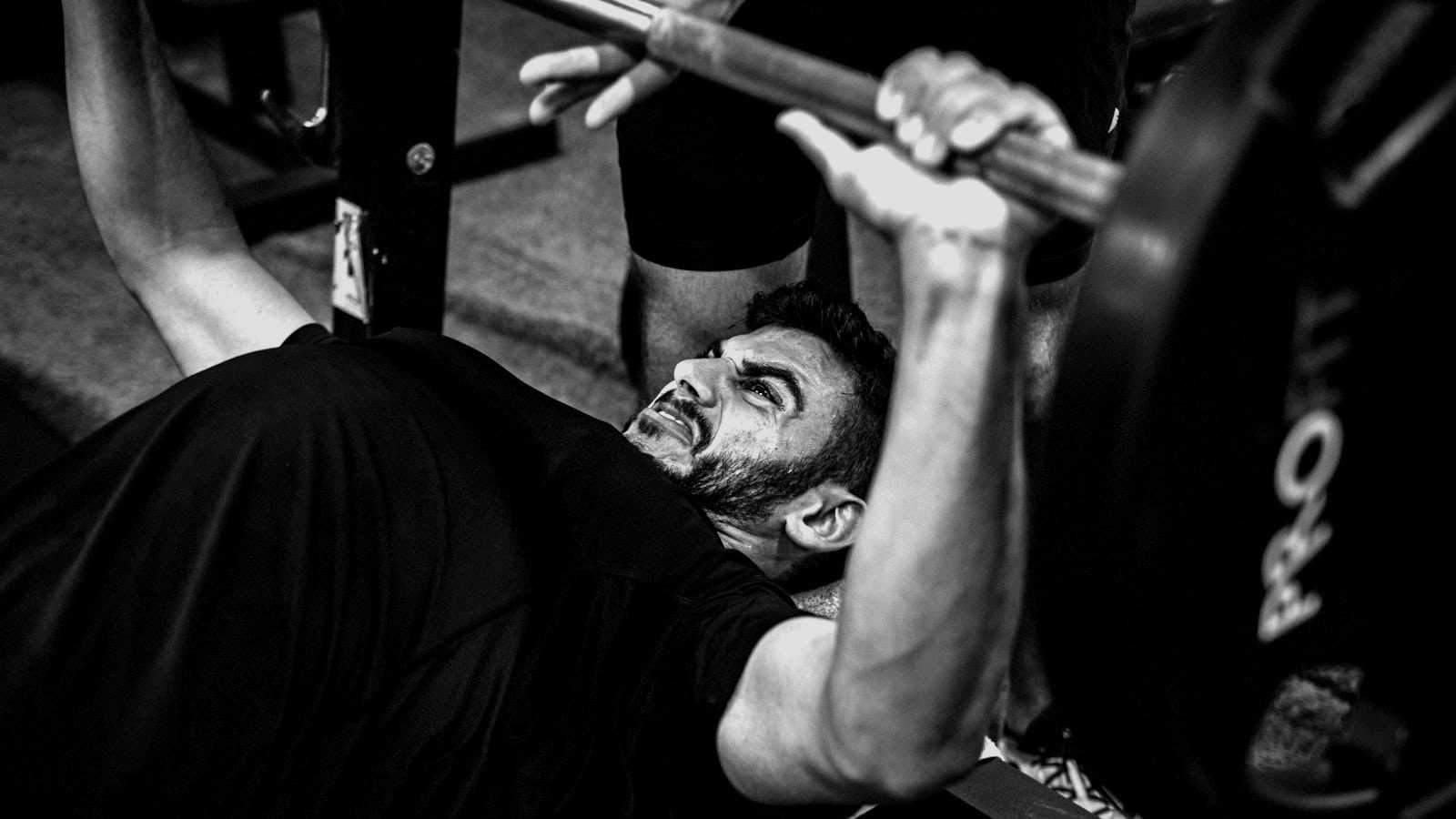
How to Know If You've Actually Reached Muscle Failure (7 Signs + How to Measure It)
True muscle failure = no rep left despite max effort. Learn the 7 signs, why rep slowdown is the only objective one, and how to measure it on your wrist.
Read the articleLatest
39 articles
01
The science
 Riven
02
The science
Riven
02
The science
 Riven
03
Training
Riven
03
Training
 Riven
04
Training
Riven
04
Training
 Riven
05
Training
Riven
05
Training
 Riven
06
Training
Riven
06
Training
 Riven
07
Training
Riven
07
Training
 Riven
08
Training
Riven
08
Training
 Riven
09
Training
Riven
09
Training
 Riven
10
The science
Riven
10
The science
 Riven
11
Product
Riven
11
Product
 Riven
12
Product
Riven
12
Product
 Riven
13
The science
Riven
13
The science
 Riven
14
Training
Riven
14
Training
 Riven
15
Product
Riven
15
Product
 Riven
16
Product
Riven
16
Product
 Riven
17
Product
Riven
17
Product
 Riven
18
The science
Riven
18
The science
 Riven
19
Product
Riven
19
Product
 Riven
20
Training
Riven
20
Training
 Riven
21
The science
Riven
21
The science
 Riven
22
Training
Riven
22
Training
 Riven
23
Training
Riven
23
Training
 Riven
24
Training
Riven
24
Training
 Riven
25
The science
Riven
25
The science
 Riven
26
Training
Riven
26
Training
 Riven
27
The science
Riven
27
The science
 Riven
28
Product
Riven
28
Product
 Riven
29
Training
Riven
29
Training
 Riven
30
Product
Riven
30
Product
 Riven
31
Product
Riven
31
Product
 Riven
32
Training
Riven
32
Training
 Riven
33
Training
Riven
33
Training
 Riven
34
Recovery
Riven
34
Recovery
 Riven
35
Recovery
Riven
35
Recovery
 Riven
36
Training
Riven
36
Training
 Riven
37
Training
Riven
37
Training
 Riven
38
Training
Riven
38
Training
 Riven
Riven
What Does Muscle Failure Actually Feel Like? (And Why You're Probably Stopping Too Early)
What muscle failure actually feels like in the gym — the grind, the involuntary slowdown — and why most lifters stop ~2 reps too soon.Riven
02
The science
Muscle Failure vs. Muscle Fatigue: The Difference That Decides If You Grow
Muscle fatigue is a process; failure in a set is an endpoint. See the velocity difference, what really drives growth, and how to tell which you hit.Riven
03
Training
Should You Train to Failure on Every Set? What the Science Actually Says
Should you train to failure every set? No — research shows near-failure (0–3 RIR) drives growth with less fatigue. Here's what the science says.Riven
04
Training
How Close to Failure Should You Train for Muscle Growth?
Train most hypertrophy sets at 0-3 RIR, strength work further out. The science on proximity to failure, effective reps, and why your RIR estimate is off.Riven
05
Training
Reps in Reserve (RIR) Explained — And Why Your Estimate Is Probably Wrong
Reps in reserve (RIR) in lifting, explained — the real scale, how many RIR for hypertrophy, and why studies show your estimate is usually off.Riven
06
Training
How to Measure Reps in Reserve Without Guessing
Measure reps in reserve objectively: velocity loss, RIR cross-check, and AMRAP calibration — plus whether an Apple Watch can read effort. Science-backed.Riven
07
Training
RIR vs RPE: Which Should You Use to Autoregulate Your Training?
RIR and RPE are the same lifting scale (RPE 8 = 2 RIR). Get the conversion table, goal-specific picks, and the self-perception flaw both share — and how to fix it.Riven
08
Training
Junk Volume: Why Half Your Sets Might Be Wasted (And How to Tell)
Junk volume is sets too far from failure to grow muscle. Learn how to spot wasted sets, what effective reps really are, and how to make every set count.Riven
09
Training
Why Am I Not Building Muscle? 9 Real Reasons You've Plateaued
Not building muscle despite training hard? The top reason is stopping short of true failure. 9 science-backed causes — and how to fix each one.Riven
10
The science
Training to Failure for Hypertrophy: Is It Necessary?
Is training to failure necessary for hypertrophy? No — if you stop close enough with enough volume. The research, the fatigue cost, and exact RIR targets.Riven
11
Product
The Best Apple Watch Apps for Strength Training in 2026 (Honestly Reviewed)
Honest 2026 review of Apple Watch strength training apps — Motra, Gymatic, Rep Up, StrengthLog — plus the one signal none of them measure: effort.Riven
12
Product
Can Your Apple Watch Detect Muscle Failure? Yes — Here's How It Works
Yes — your Apple Watch can estimate how close a lifting set got to true muscle failure via rep-velocity loss. The science, accuracy, and limits, explained.Riven
13
The science
Velocity-Based Training Without a $300 Device: How Your Wrist Can Do It
Velocity-based training reads how much your reps slow down. A wrist or Apple Watch can do it as a failure-proximity proxy — no $300 barbell encoder needed.Riven
14
Training
How to Train to Failure Safely (Without a Spotter)
How to train to failure without a spotter: which lifts are safe solo, squat/bench safety setup, and how to know you actually hit failure in the gym.Riven
15
Product
Does the Apple Watch Count Reps? (And How to Actually Get It To)
No, the Apple Watch doesn't count reps natively in 2026. Here's why — and the third-party apps that actually count reps from its motion sensors.Riven
16
Product
Can a Smartwatch Count Your Reps? Apple Watch vs Garmin vs Fitbit vs Whoop (2026)
Can a smartwatch count your reps? Apple Watch needs an app, Garmin/Samsung do it natively (but shaky), Whoop & Oura don't. The honest 2026 comparison.Riven
17
Product
The Best Automatic Rep Counter Apps for Apple Watch in 2026 (Honest Review)
Honest 2026 review of automatic rep counter apps for Apple Watch — Motra, Gymatic, Rep Up, Fitnexx vs Riven. Real pros, cons, and accuracy.Riven
18
The science
Stop Counting Your Reps: Why Manual Rep-Counting Is Quietly Wrecking Your Sets
Should you count reps? Track them — but don't tally in your head. The science on focus, why you lose count near failure, and how to outsource it.Riven
19
Product
The Best Way to Track Your Gym Workouts in 2026: Notebook vs App vs Automatic
Paper, logging apps, or automatic wrist tracking? An honest 2026 breakdown of the best way to track gym workouts — backed by real studies and device facts.Riven
20
Training
Do You Really Need to Log Every Set and Rep to Build Muscle?
You don't need to log every rep to build muscle — but tracking progressive overload makes it reliable. Why people quit logging, and the friction-free fix.Riven
21
The science
Why Your Reps Slow Down at the End of a Set (and What It Actually Means)
Reps slow at the end of a set because your muscle is making less force — involuntary velocity loss is the clearest objective sign you're near failure. Here's what it means.Riven
22
Training
How to Know If Your Last Rep Was Really Your Last Rep
Your last rep is real if it slowed to a crawl and couldn't move faster. Learn the "grinding" rep, why your brain quits early, and how a wrist sensor flags failure.Riven
23
Training
How Do You Know If You're Training Hard Enough? 6 Objective Signs
You're training hard enough when your reps slow down ~40-50% by the last reps. Here are 6 objective signs — why feel, burn, and RIR mislead, and how to measure it.Riven
24
Training
Am I Lifting Heavy Enough to Build Muscle? How to Actually Tell (Not Guess)
You're lifting heavy enough when your reps clearly slow down by the end of the set. Here's how to read rep slowdown and stop guessing whether the weight is too light.Riven
25
The science
What Velocity Loss % Should You Stop a Set At? Strength vs Hypertrophy Cutoffs
Stop sets at ~20% velocity loss for strength, 25–40% for hypertrophy, 40%+ is failure. The research thresholds, why % beats rep counts, and the honest wrist-vs-LPT caveat.Riven
26
Training
Training to Failure vs. Just Getting Tired: Are You Sure Which One?
The burn is metabolic fatigue, not failure — and it hits 3-5 reps early. Here's how rep slowdown separates true muscle failure from just getting tired.Riven
27
The science
Effective Reps Explained: Which Reps in a Set Actually Build Muscle
Effective reps are the hard, slowing reps near failure that drive growth — roughly the last ~5. Here's the science, the honest caveats, and how to spot the zone live.Riven
28
Product
Your Apple Watch Tracks Minutes and Calories While Lifting — Not Effort. Here's the Fix.
Your Apple Watch records calories and heart rate while lifting, not effort. Apple's Effort score is cardio-only. The fix: velocity loss, read from the same watch.Riven
29
Training
You Probably Have More Reps Left Than You Think: Why RIR Estimates Are Off by 3-4
Beginners are bad at estimating reps in reserve — research shows you call "2 RIR" with 4-6 reps left. Why effort feels maxed early, and the objective fix.Riven
30
Product
Velocity-Based Training on an Apple Watch: Can Your Wrist Replace a $1,500 Barbell Tracker?
The wrist tracks mean velocity at r=0.95+ vs motion capture — good enough for the failure question. When you still need a $1,500 barbell VBT device, and when you don't.Riven
31
Product
Apple Watch vs WHOOP for Lifting: Which Actually Measures Your Effort in the Gym?
Neither WHOOP nor Apple Watch measures in-set effort — both stop at heart-rate strain and manual logging. Here's the velocity-loss signal both omit, and how to read it.Riven
32
Training
How to Calibrate Your RIR: Train Your Sense of Effort So It's Actually Accurate
Calibrate your reps in reserve in 4-6 weeks: anchor with true-failure sets, run predict-then-test drills, and use velocity loss as the objective check.Riven
33
Training
When Should You Add Weight? A Smarter Trigger Than the 2-for-2 Rule
Add weight when the same load stops slowing you down. Rep speed beats the 2-for-2 rule and "I could've done more" — here's the objective trigger for progressive overload.Riven
34
Recovery
Does Soreness Mean Muscle Growth? What DOMS Actually Tells You
No — soreness doesn't mean muscle growth. DOMS signals novelty, not stimulus, and barely tracks damage. Here's the evidence and what to measure instead.Riven
35
Recovery
Do You Actually Need a Deload Week? The Signs That Tell You
You don't need a deload on a fixed schedule — you need one when fatigue signs converge. The clearest objective trigger: the same weight now moving slower.Riven
36
Training
How Many Hard Sets Per Muscle Per Week — and Why Your Count Lies
Most lifters need 10–20 hard sets per muscle per week — but if your sets stop short, your real volume is half what you think. How to find out which sets counted.Riven
37
Training
Stuck at the Same Weight for Weeks? The Effort Fix for Plateaus
Stuck at the same weight for weeks? The most common cause is under-effort, not programming. Check whether your reps actually slow down before you overhaul anything.Riven
38
Training
Rest-Pause Training Explained — and How to Know You Actually Hit Failure
Rest-pause is one set taken past failure with short rests — but it only works if each mini-set truly fails. Here's how to confirm you hit the zone, not just got tired.Riven
The dispatch
One measured note a month.
New writing on failure, velocity, and recovery. No streak reminders, no noise.